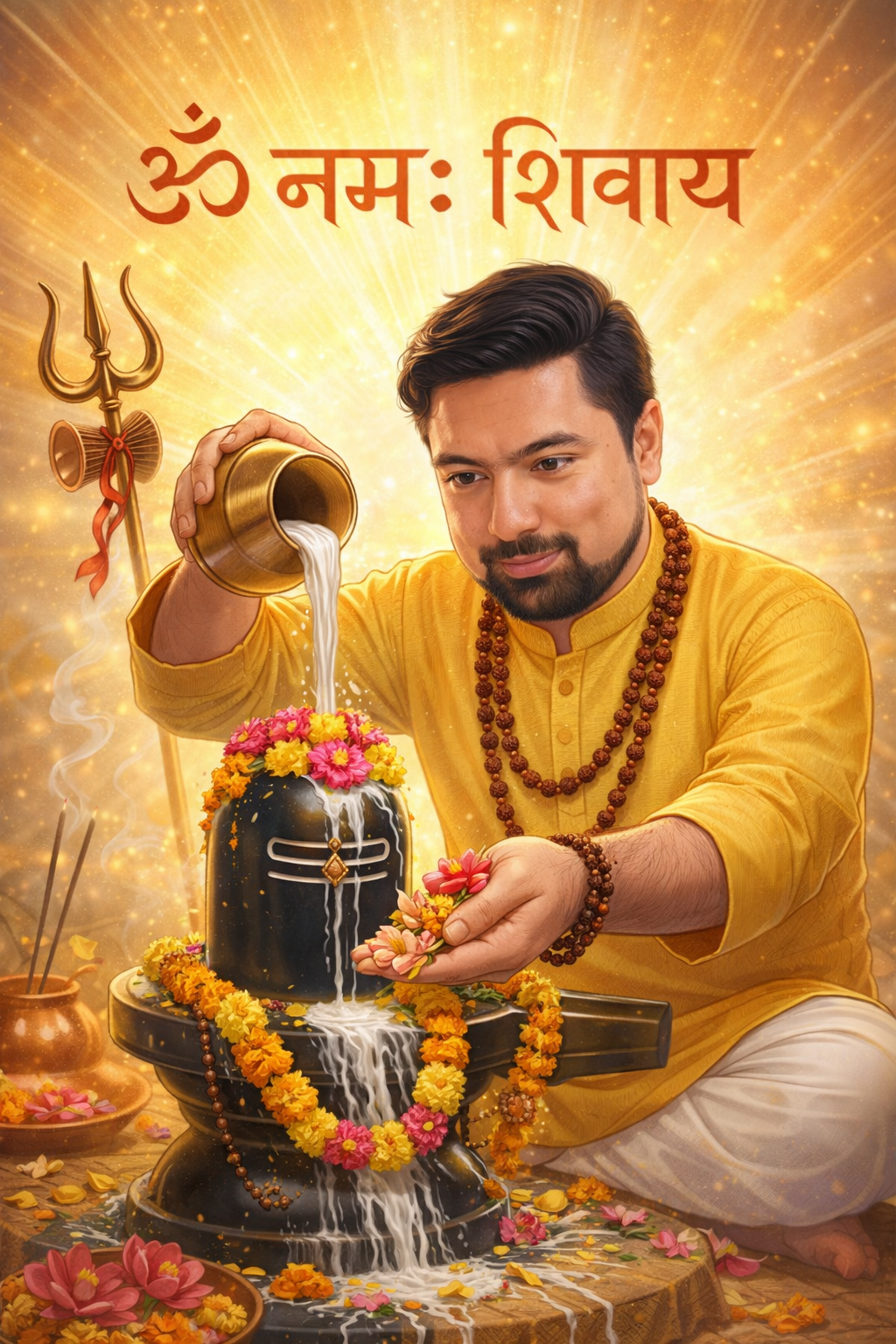
Tonight, while most of the world scrolls through feeds, chases deadlines, and battles notification fatigue — millions will choose to do the opposite. They will sit still. They will fast. They will stay awake through the night — not to party, but to pause.
This is Maha Shivratri. The Great Night of Shiva.
And it has never been more relevant than it is right now.
Then vs. Now: Two Very Different Worlds, One Common Struggle
In ancient times, life was physically demanding but mentally simpler. People lived with nature’s rhythm — waking with the sun, sleeping with the dark, eating what the earth offered. Maha Shivratri was a night to go even deeper within — to meditate, fast, chant, and surrender to something larger than themselves.
Today, life is physically comfortable but mentally chaotic. We are overstimulated, overconnected, and overwhelmed. We have everything at our fingertips, yet peace feels out of reach. The ancient sages did not have screens, algorithms, or information overload — but they understood something we are only now rediscovering: the mind needs stillness to function at its best.
That is what makes Maha Shivratri so powerful in today’s context. It is not just a religious ritual. It is a reset button — designed thousands of years ago for a problem we are only fully experiencing now.
What Did the Ancients Actually Do on This Night?
The tradition was beautifully structured around four pillars:
Fasting (Upvaas)
Not starvation, but conscious eating. Light, sattvic food or complete fasting. The purpose was to give the digestive system a break and redirect that energy inward. Today, we call this intermittent fasting — and science now confirms its benefits for mental clarity, cellular repair, and emotional regulation. The ancients knew this thousands of years before any research paper.
Staying Awake (Jaagaran)
Remaining conscious through the darkest night. This was not about sleep deprivation. It was about awareness — training the mind to stay alert even when everything around you invites you to switch off. In today’s language, this is mindfulness at its most intense.
Meditation and Chanting (Dhyana & Mantra)
Repeating “Om Namah Shivaya” or other Shiva mantras throughout the night. The vibration of these sounds was believed to align the body’s energy centres. Modern science is now studying how mantra repetition activates the parasympathetic nervous system — reducing cortisol, calming anxiety, and improving focus.
Surrender (Sharanagati)
Letting go of ego, control, and the illusion that we can manage everything. In a world that glorifies hustle and productivity, this is perhaps the hardest — and most necessary — practice of all.
How Can Today’s Generation Actually Benefit from This?
You do not need to be religious to benefit from what Maha Shivratri offers. Here is how it translates to modern life:
If you are burned out — Fasting and digital detox for one night can give your nervous system the break it is silently begging for. Put the phone down. Skip dinner or eat light. Let your body redirect its energy from digestion to restoration.
If you are anxious or overthinking — Sit with a mantra. Even 20 minutes of chanting “Om Namah Shivaya” can slow your racing thoughts. You do not need to believe in Shiva to experience the calming power of rhythmic sound. It is neuroscience as much as it is spirituality.
If you feel disconnected from yourself — Staying awake in silence, even for a few hours, forces you to confront your own mind. No distractions. No content. Just you. This is where real self-awareness begins — and it is exactly what meditation apps are trying to sell you, except this tradition has been doing it for free for thousands of years.
If you are chasing external success but feel empty inside — Shivratri is fundamentally about destruction — not of the world, but of the ego, the false identities, and the attachments that keep us trapped. Shiva is called the destroyer for a reason. He destroys what no longer serves you so that something truer can emerge. Think of it as a spiritual version of clearing your cache.
If your body feels sluggish or toxic — Ayurveda considers Maha Shivratri an ideal night for detoxification. The planetary alignment on this night is said to support the upward flow of energy in the body. Fasting on this specific night, combined with an upright posture and wakefulness, is believed to amplify the body’s natural cleansing process.
The Real Shiva: Beyond the Temple Walls
Here is something most people miss about Shiva — He is not just a god to worship. He is a concept to embody.
Shiva literally means “that which is not” — the nothingness from which everything arises. He represents pure consciousness, the stillness behind the chaos, the silence beneath the noise. He is the ultimate minimalist in a world addicted to more.
Shiva is the Adi Yogi — the first yogi. He did not teach religion. He taught awareness. He taught that the body is a tool, the mind is a vehicle, and the soul is the driver. Most of us have forgotten who is driving.
Maha Shivratri is a reminder to take back the wheel.
A Simple Maha Shivratri Practice for the Modern Seeker
You do not need a temple. You do not need a priest. Here is a simple practice anyone can do tonight:
6:00 PM — Eat a light, clean meal. Fruits, nuts, milk. Or skip dinner entirely if your body allows.
8:00 PM — Put your phone on silent. No social media, no content consumption. Light a diya or candle if you can.
9:00 PM onwards — Sit comfortably with your spine straight. Close your eyes. Begin chanting “Om Namah Shivaya” — silently or aloud. Start with 15 minutes. If you feel drawn, continue.
Midnight (Nishita Kaal) — This is considered the most powerful window of the night. Even 10 minutes of meditation during this time is believed to be immensely potent. Simply sit in silence and observe your breath.
Morning — Break your fast gently. Reflect on what came up during the night — thoughts, emotions, realisations. Journal if you can.
That is it. No elaborate ritual. Just you, your awareness, and the willingness to be still.
The Paradox of Shivratri
In a world that tells you to do more, Shivratri asks you to be more. In a culture obsessed with light, it celebrates the dark. In an era of noise, it offers silence. In a time of accumulation, it teaches letting go.
Perhaps that is exactly why an ancient night of stillness feels so revolutionary today — because stillness itself has become the rarest luxury.
This Maha Shivratri, do not just scroll past. Pause. Even for a moment. Close your eyes. Take a breath. And connect with the divine within.
Om Namah Shivaya
VedicJivan by Nandish — Connect Your Divine Within…
Discussion